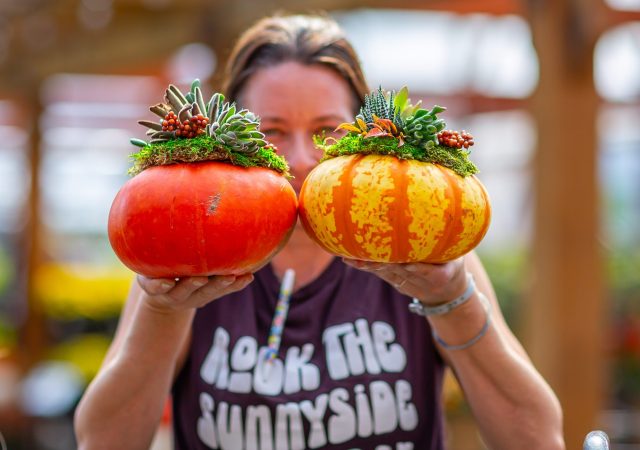
Decorate Your Doorstep
Posted by Sunny D on September 20th 2010 in blog
Easy container recipe for fall. Decorate your doorstep with just a few basic components. Mike Hurley on YouTube once again!
Posted by Sunny D on September 20th 2010 in blog
Easy container recipe for fall. Decorate your doorstep with just a few basic components. Mike Hurley on YouTube once again!
Posted by Andy on September 9th 2010 in blog
I love basil – the smell reminds me of my great-grandmother’s kitchen and always makes me hungry. Yet, aside from a couple caprese salads, I never seem to use much and always end up cutting down a giant plant in the fall. Last year, after reminding myself how much fresh basil costs at the supermarket, I decided to make a giant batch of pesto pasta sauce. Having cheap, delicious, easy to make suppers throughout the winter was well worth the little time I put into making the sauce, and I highly recommend using your unused basil in a pesto.
Pesto freezes remarkable well, so make as much as you want. The general rule for making pesto is to use 2 cups of fresh basil leaves along with ½ cup olive oil, ½ cup grated parmesan cheese and a clove of garlic. If you have a food processor simply toss those ingredients together, hit start, and pesto! Making pesto also works in an ordinary blender, although you may have to add more olive oil. Season with salt and pepper to taste. Some pesto lovers fry pine nuts in a little olive oil and add them to the food processor, but I prefer to fry them and keep them whole and add to the pasta when prepared.
Pesto pasta is simple, easy and healthy. To boost the good-for-you factor try adding broccoli and snow peas to get your daily injection of veggies.
Posted by Andy on August 6th 2010 in blog
And now for another installment of the Procrastinating Gardener. Last week I talked about some perennials I use to accent my flower beds in the summer. This week I’d like to write a few words about some shrubs that have caught my eye.
My one constant wish, no matter where I live, is always for a bigger yard so I can plant more shrubs and trees. Yet despite my limited confines I somehow manage to plant a couple new shrubs every year and lucky for us procrastinators summer is a perfect time to do large shrub and tree installation. Not only will planting this time of year help the plant become established and acclimated the garden, next year the shrubs will come up bigger and ready to pack an even bigger flower punch. In particular, as I bike around town and check out some of the great gardens in this neighborhood, I’ve got an acute hydrangea envy. Nothing looks better against a house that a flowering ‘Annabelle’ Hydrangea, with its masses of huge white pom-pom flowers, and although they take some watering, few plants can match the appeal of a flowering hydrangea. Barberry is another great shrub that adds season long color, and there are plenty of colors to chose – from the deep dark burgundy of ‘Royal Burgundy’ to the intense yellow of the ‘Sunsation’ Japanese Barberry.
If you’ve finished all your gardening for the year have a glass of lemonade, relax and enjoy your hard work – but if you’re like me there is nothing more rewarding that spending the wonderful Minnesota summers outside, working in the gardening, and creating a living work of art to share with your friends and neighbors. And if gardening can seem like a never-ending project that you keep pushing back, join me and the rest of the procrastinators and take it one spot of the garden at a time or even one plant at a time. Trust me, not only is it worth it for the finished product, the true and fulfilling joy is working outside, in the dirt, with the sun on your back and your creativity at the forefront of your mind.
Posted by Sarah on August 5th 2010 in blog
What to do with all the cucumbers!
Pickle them the easy way:
7 cups sliced cucumbers(unpeeled), 1 cup green peppers diced, 1 cup onion slivers, 1 tsp celery seed, 2 T salt, 2 cups sugar, 1 cup white vinegar. Dump all together and refrigerate…stir or tip the sealed bowl over now and then. Add cucumbers to the brine as you eat them.
They are yummy and last a long time.
Posted by Sarah on July 29th 2010 in blog
Posted by Andy on July 26th 2010 in blog
And now for another installment of the Procrastinating Gardner, a little late perhaps, but what did you expect? In my last blog I wrote about adding some easy color to the garden via summer blooming annuals. In this entry I’d like to talk a little about some of the summer blooming perennials that I’m using and admiring.
It’s time for me to tweak my perennial beds and the name of the game is great summer color. I’m in love with two perennials in particular: Rudbeckia ‘Goldstrum’ and Perovskia/Russian Sage, and I believe that every Minnesota garden should have at least one of these stellar summer flowering perennials. ‘Goldstrum’ also known as the hardiest ‘Black-eyed Susan’ boasts a ton of large, deep yellow flowers with black eyes that bloom now and well through the summer. Russian Sage is a great perennial for the height it adds (nearly 4 feet), extremely long lasting blue blooms, and its tough tolerance of the summer heat. I am also fairly addicted to Pomegranates – whether in juice form, tea form or plant form. That’s right – now I can have pomegranate in my garden with the awesome summer blooming ‘Pomegranate’ Yarrow, which feature triumphant large pomegranate red flower clusters that are notable long lasting and intensely colorful. Also be sure to check out some of our Minnesota native perennials, from the funky purple Liatris to the bodacious orange Asclepias that are just starting to show their color now.
Lastly, lets not forget Sedum, one of the most exciting perennial plant families -whether it’s the standard and always stellar Autumn Joy Sedum or some of the funkier new varieties, Sedum remains the king of the late blooming perennials. With so many cool varieties out there it would be impossible to list them all here, but I’d like to highlight a few that I am especially excited about. Mr. Goodbud Sedum, in addition to having one of the hippest names, is a great new introduction to the Sedum family – smoky, grey-blue foliage make it stand out amongst the green in the garden and in late summer the plant is covered in light, ruby red blooms that have no equal in impact. I’m also super excited about all the new ground-cover Sedums that are making their way here to Sunnyside. The Blue Spruce Sedum in particular caught my eye and earned an instant place in my garden – short stalks of sky blue foliage that truly resemble the foliage of a spruce cover the ground and produce larger stalks topped with freakish yellow blooms in late summer. I’m so Sedum crazy this year I even planted an all Sedum garden next to my garage which seems to have the driest and toughest soil in my yard (oh, yeah, did I mention that Sedums are the most drought tolerant perennial?)
I could go on and on about perennials, but I’d rather have you come visit, check them out and chat with me about gardening. I have a few more ideas about planting shrubs but it the spirit of my procrastination I’ll save it for later.
Posted by Andy on July 6th 2010 in blog
Hey, I have an excuse, right? I work long hours in the spring, unloading trucks and helping people construct gardens that are sure to be the envy of their neighbors. I simply don’t have the time to get working in my garden in spring when my perennials are coming up and all my neighbors are installing annuals and designing their pots. But maybe I should be honest with myself – considering my study habits in college and my penchant for putting things off I have to admit I am a first class procrastinator. I’d like to think that I’m not the only one out there who puts off their gardening until the summer months. So, just in case there are other procrastinators out there like me, I’d like to share some of my mid-seasoning gardening ideas.
This time of the year my perennials are in full color mode, and aside from cutting back my Saliva and some serious weeding, the perennial beds are looking ok. Yet sometimes that’s just not enough. I find myself wishing for the color that only annuals can give. I’m a firm believer that it’s never too late to plant annuals – our season is so short in Minnesota that it’s worth installing some great mood-enhancing color anytime. Lucky for me (and all the procrastinators out there) there are some great annuals that are just coming into their brilliance this late in the year. Huge flowering ‘Dreamland’ Zinnias offer a multi-color solution to any spot in the garden that gets at least a half day of sun and needs a little shot of some serious flower power. Annual Saliva are also just coming into full form, offering an abundance of blue spiky flowers that are sure to liven up even the most tired spots of the garden. Celosia, one of my personal favorites, is another great infusion of color, with wicked red and yellow fuzzy flowers that look great planted en mass, along borders, or anywhere you just need to break up a sea of green. And don’t miss out on the most exciting introduction in annuals this year – ‘Fireworks’ Pennisetium grass. You simply have to see this one to believe it – deep red grass with slight variegation that provides an excellent alternative to the purple Rubrum grass and is sure to provoke lots of questions along the lines of, “what is that amazing grass and where did you get it?”
So… In the spirit of procrastination I will put off the rest untill later, but be sure to check back soon for some great ideas to spice up the perennial garden. I will get to it, soon, I promise.
Posted by Sarah on June 2nd 2010 in blog
Don’t let its name fool you – the wonderful perennial Baptisia Australias isn’t from Australia – it is actually a great winter hardy perennial native to Southern Canada and the northern United States. A member of the pea family, Baptisia gets its name from the Greek word ‘baptisis,’ meaning “immerse, soak or dry” and refers to the indigo-blue pigment obtained from its leaves and often used for dyes. Also called ‘false indigo’ or ‘blue indigo,’ in addition to its typical sublime blue, pea-shaped flowers, growers have also introduced striking white and yellow flowered varieties.
In my opinion Baptisias acclaim as this years perennial of the year is long overdue. Extremely easy to grow, Baptisia also is amazingly disease and pest free, tolerates drought and poor soil, attracts butterflies and deters plant eating deer. Baptisia even fixes nitrogen in the soil, benefiting surrounding plants in any garden bed. Baptisia performs best in full sun, although it will tolerate some shade (although in too much shade it may require some simple staking).
Shrub-like, Baptisia grows three to four feet tall at maturity and features interesting clusters of small flowers in summer. Puffy seed pods emerge from spent flowers and turn charcoal black in fall, and if left up provide great interest in the winter months. Children uses to pick these seeds pods in the fall and use them for rattles, as the seed make a surprising amount of noise when rattled around in the pods. Great companion plants include Echinacea and penstemon.
Posted by Sarah on May 10th 2010 in blog
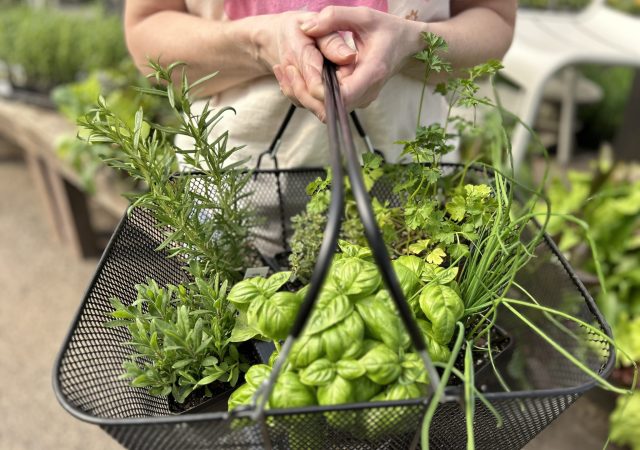
Now is the time of year to get ready for planting your kitchen garden. Sunnyside Gardens has a huge selection of starter plants and seeds for you to choose from. We have the veggies- tomatoes, peppers, onions, lettuce, beans, peas, etc. AND the herbs- sage, basil, rosemary, thyme, and all the others to make a perfect compliment for healthy tasty meals. The easiest way to get a great garden kitchen growing is to start with a healthy soil foundation, make a plan, and start planting! Our starter plants are a simple way to get growing.
What are some of your favorite veggies to grow? What is your preference of tomato varieties? Do you like to grow a certain herb that really makes a knockout of your meals? Let us know, leave a comment!
Posted by Sarah on April 29th 2010 in blog, Uncategorized
You may notice something strange afoot at Sunnyside these days (week?) and no, it’s not just JR’s new hairdo. Everyone is sporting the stylish Pink, Susan G. Komen for the Cure, Nitrle Touch gardening glove. The staff at Sunnyside is excited to raise awareness for breast cancer research (not to mention protect our hands from the daily blisters of gardening!). We are encouraging our customers to join our pink glove brigade and we have two fun ways to participate!With any gift card purchased (minimum of $35), you will receive a pair of pink gloves for free! You can also contribute by simply buying the gloves. For each pair of gloves sold 70 cents will go directly to Susan G. Komen for the Cure, the global leader in breast cancer research. A perennial top rated 4-star charity, Susan G. Komen for the Cure is praised by Charity Navigator as “consistently executing its mission in a fiscally responsible way and outperforming most other charities in America.” This stellar organization has invested nearly 1.5 billion dollars since its inception and shows no sign of letting up until a cure is finally found.
Hope abounds in the fight against breast cancer – the five year survival rate for breast cancer is now above 98%, compared with just 74% in 1982. However, without a clearly know cause or cure, the fight is now more relevant and monumental than ever. A startling one in eight women will be diagnosed with breast cancer within their lifetimes.
Please join us in raising awareness and money in the fight against breast cancer. In a story I am sure a sad majority of people can relate to, I recently watched a friend battle with breast cancer. Thankfully in remission, after a terrifying year of financial woe and emotional uncertainty, her breast cancer and the hope for a cure is firmly planted in my mind. For her and the millions of others out there let’s fight this battle with them. And we can do it, one pair of pink gloves at a time.
The Gift Card and Glove Promotion runs May 1st through Mother’s Day (May 9th!).
Posted by Sarah on April 15th 2010 in blog
If you haven’t caught wind of the new requirement to use compostable bags for your lawn waste, you are probably not alone. The short of it is, as of Jan. 1st 2010, residents of the Twin Cities area who bag their yard waste for pick up need to use biodegradable compostable bags, rather than the traditional black plastic lawn bags. This requirement affects residents in the following counties: Anoka, Carver, Dakota, Hennepin (excluding the City of Minneapolis), Ramsey, Scott, and Washington. Residents of the City of Minneapolis have until Jan 1st, 2013 to make the switch.
Sounds like many retailers were caught off guard with this requirement, and people are having some trouble finding these bags. Good news- Sunnyside carries both varieties, and we have them in stock! We have the plastic Bag to Nature 33 gallon bags and paper Bio-Save Lawn and Leaf bags.
Posted by Sarah on March 31st 2010 in blog
For Minnesota gardeners a pansy is a welcome and exciting sign of spring. The staff here at Sunnyside has even dubbed a term for the joy that the pansy and the coming spring it signifies: Pansymonium! In a stark and colorful explosion the first pansies obliterate the white doldrums of the winter and kick our spring here off in an excellent way.
From the Greek word ‘pansee,’ to think, the pansy has been around nearly forever. First utilized in gardens dating back to the 4th Century B.C., the pansy, along with its sister plant, the viola have been bringing bodacious color to gardens around the world. There are some 500 different species of pansy, with differences so minute that only a botanist would care to tell them apart, but the diversity of the pansy offers the gardener a plethora of color – from orange to violet, sky-blue to electric tri-color.
The pansy has made its mark all over history. Shakespeare used the symbol of the pansy in Hamlet (“And there is pansies, and that is for thought”) illustrating Ophelia’s character and referring to the pansy’s reputation to cure romantic problems. The religious and non-believes both use the pansy – in Christianity due to the pansy’s tricolor variety it is often used to symbolize the trinity, remembrance and meditation; while the pansy’s invocation of free thought was used as image for the American Secular Union formed in the late 1800’s.
The pansy is a cool loving plant – the first to show its flowers in the spring and also blooming in the cool months of the fall. The pansy tends to hibernate in the hot months of mid-summer, so getting the most bang from the pansy involves planting them early, right after the threat of a hard frost has passed.
It’s a good idea to plant pansies with plenty of compost for nutrients and to regularly fertilize, either with a slow-release granular or a liquid shot once a month. Stem rot and leaf rot, the most common problems associated with the pansy are best dealt with by prevention involving careful watering. Water when dry, but don’t allow to soil to stay wet, as this leads to rot. Once pansies bloom it is a good idea to deadhead them to prevent seeding and to encourage blooms.
Posted by Sarah on March 17th 2010 in blog
Community Supported AgricultureThis year Sunnyside is happy to announce that we will be functioning as a drop site for a local Community Supported Agriculture farm. In conjunction with Turnip Rock, located just across the border in New Auburn Wisconsin, Sunnyside will receive weekly shipments of sustainably raised, local organic produce.
Community Supported Agriculture (CSA) works by partnering the farmer and consumer in a simple and environmentally friendly way. The consumer shares the cost of supporting the farm, helping the farmer purchase supplies, equipment and seed. In return the shareholders are guaranteed fresh, locally grown organic produce. In addition to the benefits of great, organic produce, Community Supported Agriculture benefits the community as a whole – providing local small farms dedicated to true organic farming with an economically viable way to compete with the ever expanding Big Agribusiness. In return for this help most CSA farms are dedicated to community participation, inviting shareholders to come and spend time in the relaxing, urban-alternative of their farms (although, to reduce the number of vehicles involved in the process, a centrally locate pick-up spot, like Sunnyside, is designated).
We invite all of our customers to come in and learn with us about organic vegetables and Turnip Rock CSA. We anticipate this new program, in addition to our highly successful plastic pot recycling program, will not only become a vital part of Sunnyside’s ongoing effort to ‘be greener’ but also be an exciting way to engage with our wonderful community. Signup Form
Posted by Sarah on March 6th 2010 in blog

You don’t have to wait for warmer weather to start gardening. In fact, if you want to grow your own vegetables from seed, you can’t wait much longer.
There are basically two options for herb and vegetable gardening: start seedlings indoors and transplanting them to the garden, or buy plants that are already growing in containers. (These will be available in a few months.)
Starting vegetables indoors is easy. You’ll save money and you won’t believe the number of varieties available when you’re buying seeds.
Containers: Pick up some plastic cell packs or small peat pots (which can be planted directly into the ground later).
Soil: Seedlings are sensitive to infection and need lots of moisture and nutrition, so look for special “seed starter” soil which will be sterilized, light and airy.
Planting: Plant seeds to the depth specified on your seed packet.
Water: Water with a fine mesh watering can or spritz with a spray bottle. Too much water will wash your seeds away.
Put the containers in another tray filled with pebbles to keep the containers up out of the excess water.
Light: In Minnesota, even a south-facing window probably won’t give enough light. Hang a fluorescent light about four inches above the seedlings.
Heat: Most seeds need a temperature of 68-70 degrees to germinate. To create more heat, you can place glass or plastic over the tops of your containers until the first sprouts emerge. Then remove the covering—the seedlings are now slightly more tolerant of temperature change.
Transplanting: Your plants need a little transition time before you put them into the garden. For a few days, place them outside for several hours in the shade. Then let them spend a night outside while still in the pots. This process of “hardening off” will prevent shock once your plant goes into the garden.
Timing: You need to get an early start, but too much time indoors isn’t good either. Your plants can become spindly and produce less.
Tomato seeds, for example, should be started indoors between April 1 and April 15. Then transplanted to the garden between May 15 and June 1.
Here’s a great link with dates for planting and transplanting your favorite herbs and vegetables in Minnesota gardens:
http://www.extension.umn.edu/distribution/horticulture/DG1422.html
Good luck!
Posted by Sarah on March 2nd 2010 in blog
The snow hasn’t melted yet and the irascible Punxsutawney Phil saw his unwelcome shadow, predicting another six weeks of winter, but the staff here at Sunnyside is excited about spring. We are anticipating another great year, catching up with each other and looking forward to seeing our fabulous customers again. 2010 is shaping up to be an exciting year for gardening, with a slew of first time gardeners coming in with plans for edible gardens and an exciting collection of new winter hardy perennials and shrubs to spice up the landscape.
March finds us hunkered down in our greenhouses, potting up perennials from plugs and bare root for the coming season. A typical scene involves Todd driving dirt in with the loader, JR carefully potting a bare root Astilbe, Mike at his desk tireless ordering all the plants that will soon make our now spare lot a lush garden center, and general laughter and merriment abound around the potting table. Feel free to stop by and help us get a jump start on spring!
March is also when Sunnyside does the majority of its seasonal hiring. If you’re looking for a great job, working outdoors with great people then Sunnyside could be the place for you. Come in and ask any of our friendly staff for an application or download one online.
Posted by Sarah on November 25th 2009 in blog
Thanksgiving finds the staff at Sunnyside in a reflective mood – looking back on a fast and fun year and anticipating a restful two month winter break come Christmas. While Sunnyside will shut down for Thanksgiving Day and each staff will enjoy turkey time with their families, we got together to compile a brief list of things we are thankful for that we would like to share:
- A beautiful year – from a near perfect gardening May, to a not unbearably hot July and August to a mercifully mild November.
- Great Neighbors and Good News – We’ve enjoyed a great partnership with France 44 this year and are thankful for their help in orchestrating some of our fun events here. We are also thrilled to learn we will have a new neighbor next year – Linden Hills Co-op will be moving into the old Almsted building, bringing great food and hip neighbors.
- Our Jobs – Congruent with popular belief, working at Sunnyside is the best job in the world –outside in the sun with a small and intimate crew of wonderful people and working with…
- Our Unbelievably Awesome Customers – The one thread that ran through each staff members thanks was our customers. Plants may be mood-improving and peaceful to work with but let’s face it – they get quite boring and are incapable having a conversation (although this fact doesn’t stop Todd for trying from time to time). We are truly blessed to be situated in this small corner of paradise in Southwest Minneapolis and are heartily thankful that your wonderful patronage has helped make our humble garden center a hip, cool and vibrant small business for almost eighty years now.
We thank you for a wonderful year and look forward to making next year another great one, and continuing to build relationships with our great patrons.
Posted by Sarah on November 12th 2009 in blog
Halloween has come and gone. So now it is time to start thinking about…Spring? Yes, that’s right: Spring. Forget about Thanksgiving, Christmas, and New Year’s Eve for a moment. The most popular question during spring at Sunnyside Gardens is this: What caused my evergreens to brown over the winter? The brown, dead appearance of evergreens in spring time is referred to as winter burn, which is caused by loss of moisture in the needles during winter and late fall. With a little winter protection (starting now), your evergreens will be green instead of brown at the start of spring.
What is winter burn? Winter burn is the browning of foliage due to rapid moisture loss. The plants can’t replace the loss of water because the ground is frozen.
What causes it? Everything! Winter damage is mainly caused by scraping winds and cold temps. But snow, ice, salt, bright sun and animals can also cause large amounts of damage.
What kind of damage will happen? There could be scald, browning, die back, root injury, and heaving.
How do I prevent winter burn?
1.)Water all season, up until it freezes and put an application of wilt stop on the foliage.
2.)Avoid direct sun and windy locations.
3.) Wrap burlap around evergreens or build a screen.
4.)Plant evergreens that have proven resistance to winter burn. For example, evergreens such as ‘Rushmore’ arborvitae, ‘Techny’ arborvitae, and various junipers are great.
Posted by Sarah on October 30th 2009 in blog
Some plants aren’t as tough as others. This can be a grim fact to face for northern gardeners. We invest our sweat, lower backs and money into certain plants only to see them crumple and die by the cold hands of our Minnesota winter. Our topsy-turvy winters dish out unpredictable snow cover. Weaker plants that aren’t given added protection and do not have a substantial layer of snow pack can succumb to the frost, winds, and fluctuating extreme temps. In our icy Midwest environment, any new perennials (and some old ones) can benefit from the cozy comforts of winter mulching.
Why mulch? To protect plants from the damaging cycle of freezing and thawing. The vast swing of warm and cold temperatures can destroy roots quickly.
When do I mulch? Apply winter mulch when the ground is frozen and will stay frozen for the winter. Mid November is usually the target time.
What do I mulch with? Hay, straw, or leaves.
Hay or Straw? Both will do the job. Straw is golden in color, doesn’t pack down, and is a great insulator. Ha
y packs down, but can have seeds from weeds or grass. Sunnyside sells both straw and marsh hay.
Leaves? Leaves are a good mulch to use and are readily available.
How much mulch to use? 4-6” deep around the base of the plants.
Which plants should I mulch? Any plant that is tender (some zone 4s are weaker than others), newly planted perennials, or plants that are susceptible to winter damage.
What do I do with my zone 5 plants? The immediate Twin Cities area is listed as a Zone 4. With plants that are Zone 5, an extra heavy layer of mulch is needed. Fence in the plants and fill the area with mulch, ensuring the plant will be protected and the mulch will stay for the entire winter.
What about rabbits? If the cold doesn’t kill the plants, the rabbits will. These pesky creatures feast all winter on shrubs, perennials, and trees. If rabbits are a severe problem, use the combination of chicken wire and either Liquid Fence, Shake Away, or pepper spray.